



























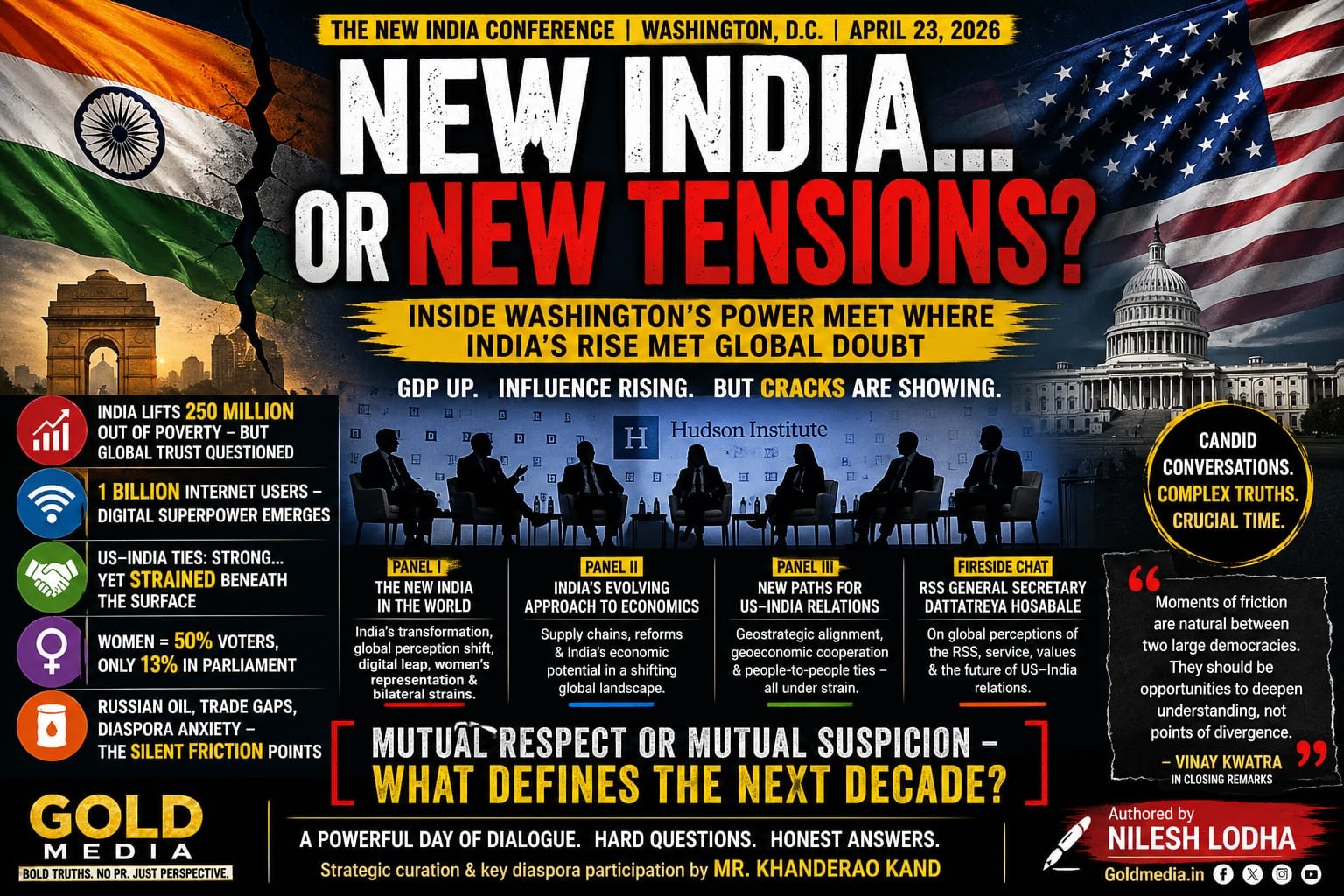
Washington, D.C. | April 23, 2026 — The New India Conference, hosted by the Hudson Institute, brought together senior officials, policymakers, and global thought leaders for a candid discussion on India’s rise and the future of U.S.–India relations at a pivotal moment for both nations.
The conference opened with remarks from Hudson Institute leadership alongside Vinay Kwatra, setting the tone for a day of high-level dialogue focused on India’s global ambitions, economic transformation, and strategic alignment with the United States.
Panel I: The New India in the World
The first panel featured Vijay Chauthaiwale, Head of Department of Foreign Affairs, Bharatiya Janata Party, Kenneth Juster, Former US Ambassador to India and former Member of Parliament Priyanka Chaturvedi.
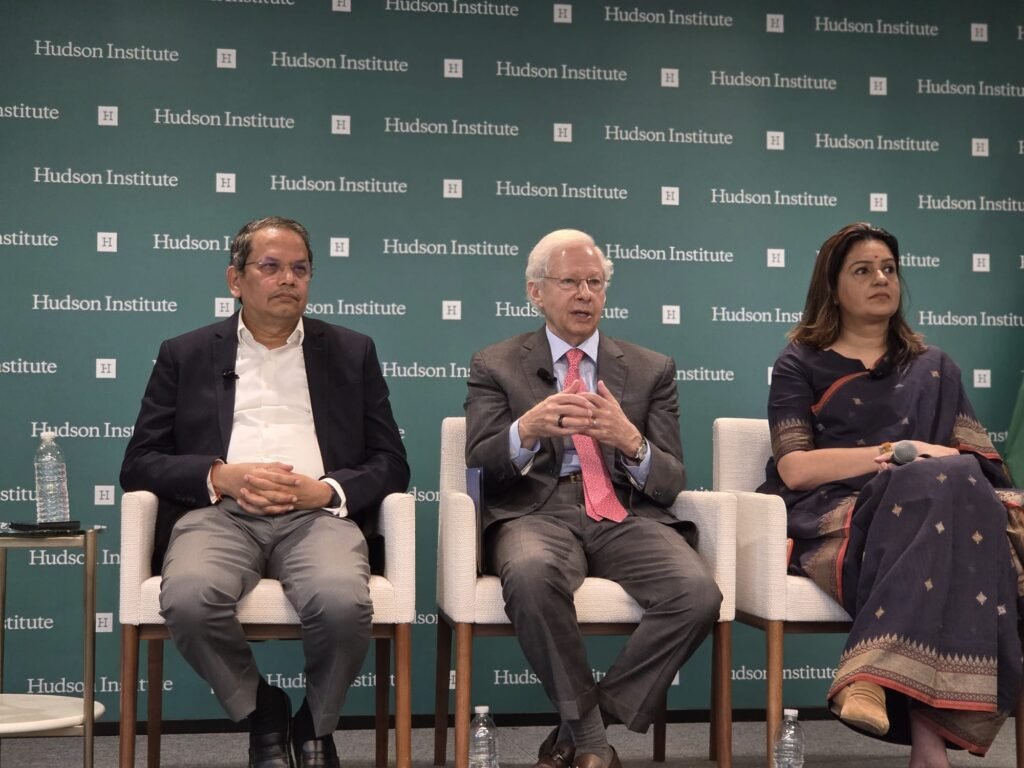
Chauthaiwale outlined India’s rapid transformation over the past decade, noting that the country’s GDP has grown by approximately 40% and that nearly 250 million people have been lifted out of poverty. He emphasized a shift in global perception, with India increasingly viewed as a “land of opportunity.” He also highlighted the country’s digital expansion, with internet users rising from roughly 250 million to nearly 1 billion.
He added that Indian Americans are viewing recent tensions in U.S.–India relations through a nuanced lens, with concerns particularly evident among H-1B visa holders.
Chaturvedi addressed the issue of women’s political representation, pointing out that while women make up nearly half of India’s electorate, they hold only about 13% of parliamentary seats. She expressed optimism about the Women’s Reservation Bill, suggesting it could allocate around 180 seats to women in the future. She also acknowledged recent strains in bilateral relations, noting ongoing diplomatic efforts to rebuild trust.
Juster reflected on key challenges during his tenure, including the COVID-19 pandemic, the Pulwama attack, and tensions along the Line of Actual Control with China. He emphasized strong U.S. support for India during these crises, while also raising concerns about trade execution and India’s continued purchase of Russian oil.
Panel II: India’s Evolving Approach to Economics
The second panel explored India’s evolving economic approach, featuring Ashok Malik, Richard Rossow, Nisha Biswal, and Hemang Jani.
Panelists discussed India’s role in global supply chains, policy reforms, and its potential to serve as a key driver of economic growth amid shifting geopolitical realities.
Panel III: New Paths Forward for US-India Relations
The third panel, featuring Ram Madhav -President, India Foundation and former National General Secretary of BJP, Kurt Campbell -Chairman and Co-Founder, The Asia Group and former Deputy Secretary of State and Elizabeth Threlkeld -Senior Fellow and Director of the South Asia Program, focused on the future trajectory of bilateral ties.
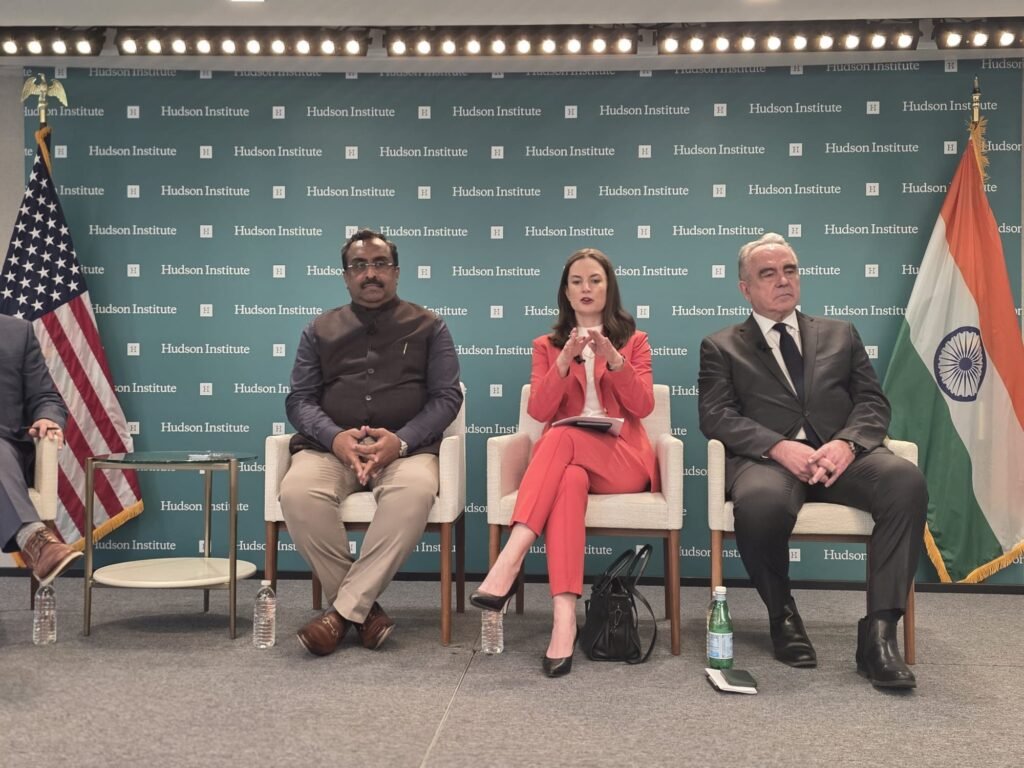
Madhav emphasized that while the U.S.–India relationship is likely to endure, it must confront present challenges directly. He outlined three pillars of the partnership: geostrategic alignment, geoeconomic cooperation, and people-to-people ties. He noted that all three are currently under strain, particularly diaspora relations, where anxiety has been growing.
He called for renewed focus on “mutual respect, mutual sensitivity, and mutual interest” as guiding principles for strengthening the partnership, while expressing optimism about future diplomatic engagement.
Fireside chat with RSS General Secretary :Dattatreya Hosabale
A fireside chat between Walter Russell Mead and Dattatreya Hosabale examined global perceptions of the Rashtriya Swayamsevak Sangh (RSS).
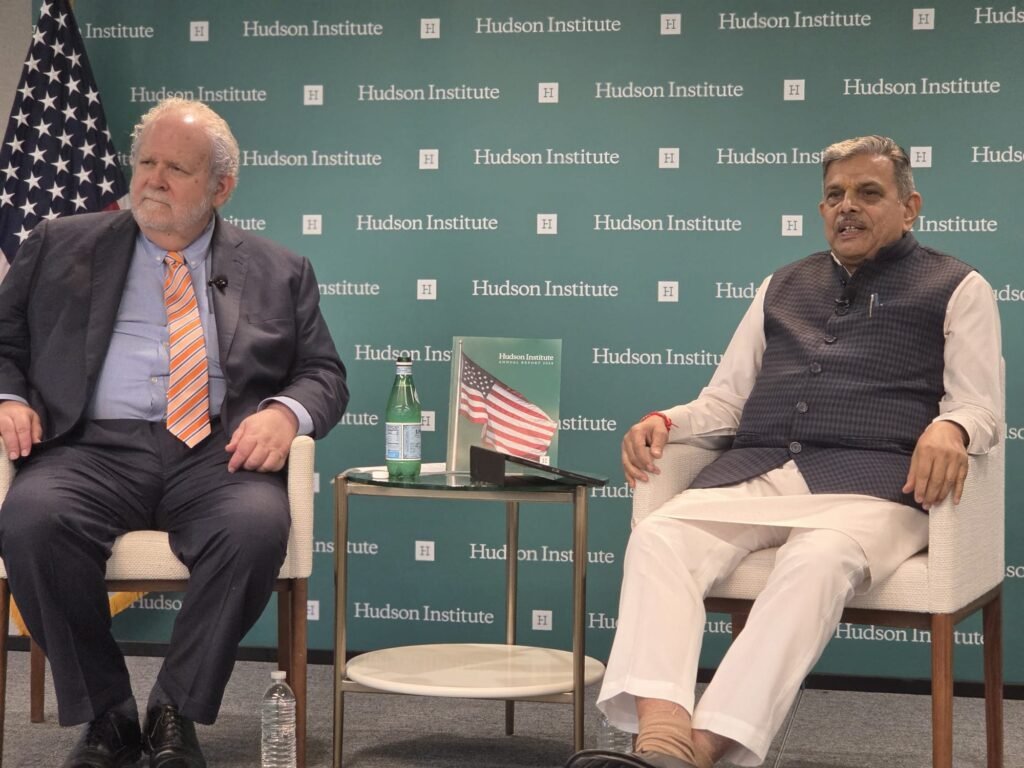
Hosabale described the RSS as a voluntary organization rooted in Hindu philosophy and focused on community service, while addressing why it is often misunderstood internationally. During the fireside chat, Dattatreya Hosabale offered a candid assessment of the current state of U.S.–India relations, acknowledging both the strength of the partnership and the underlying tensions shaping it today.
In his closing remarks, Vinay Kwatra emphasized that the U.S.–India relationship remains one of the most consequential partnerships of the 21st century, even as it navigates a period of recalibration. He noted that moments of friction are natural between two large democracies but should be viewed as opportunities to deepen understanding rather than points of divergence.