



























A Protest. A Hunger Strike. A Reality Check.
Every generation believes it has discovered the perfect way to change the world.
The freedom movement had marches.
The 1970s had student agitations.
The 2010s had street protests.
The 2020s have hashtags.
The question is: Which one actually changes public policy?
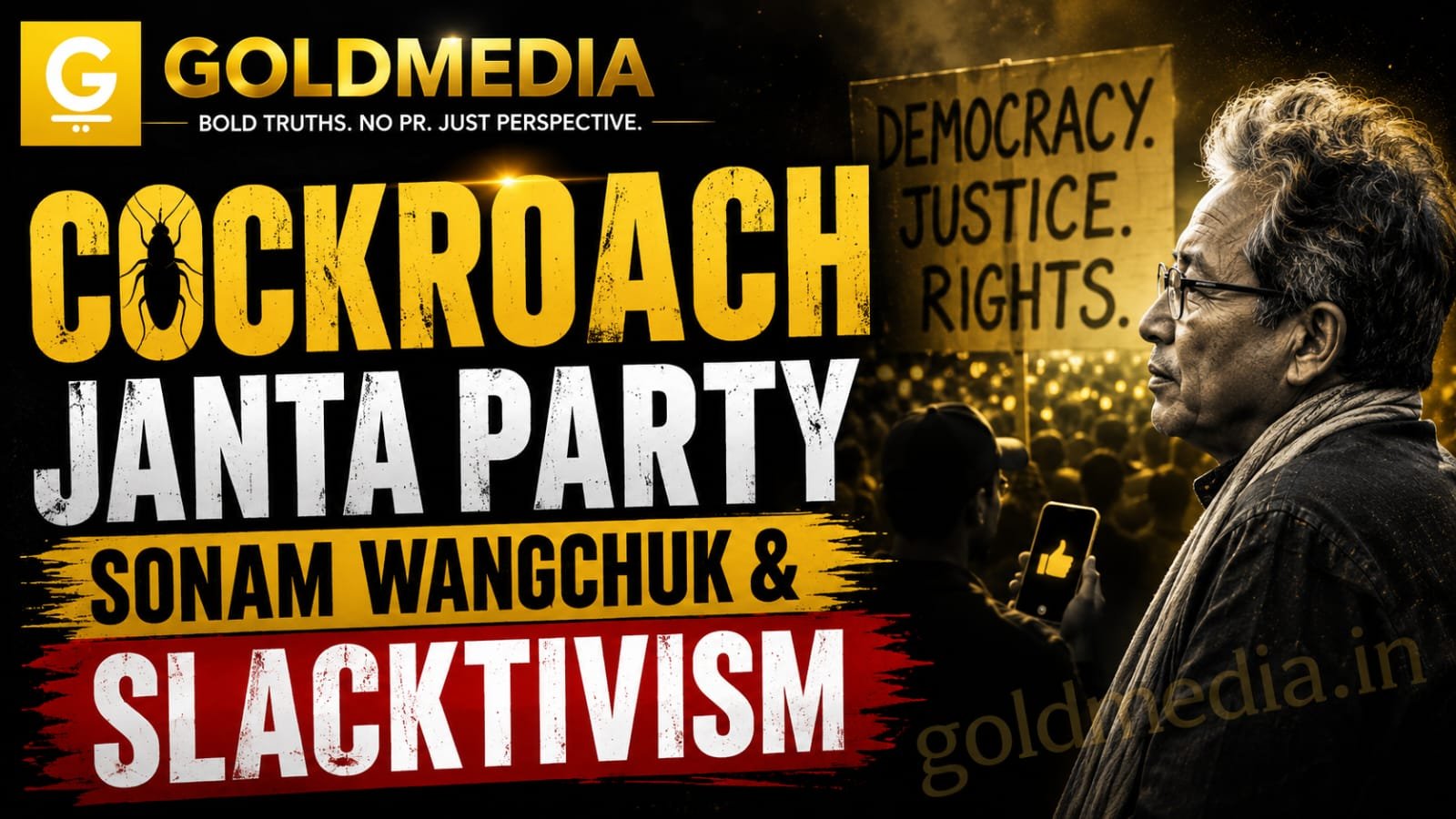
That question lies at the heart of the debate surrounding the Cockroach Janta Party, Sonam Wangchuk’s hunger strike, and the growing phenomenon of slacktivism.
The Illusion of Digital Strength
Social media has created an entirely new political currency.
Followers.
Views.
Shares.
Comments.
Trending hashtags.
These numbers create an impression of overwhelming public support.
But elections are not won by hashtags.
Policies are not changed by likes.
Governments do not negotiate with algorithms.
They negotiate with sustained public pressure.
The gap between digital enthusiasm and physical mobilisation has become one of the defining features of modern politics.
Sonam Wangchuk’s Moment
A hunger strike is perhaps the purest form of democratic protest.
It demands nothing from others except moral attention.
Its strength does not come from force.
It comes from the willingness of society to stand beside the protester.
History shows that such protests become politically powerful only when they inspire sustained public participation beyond the individual at the centre of the movement.
Dharmendra Pradhan at the Centre of the Political Storm
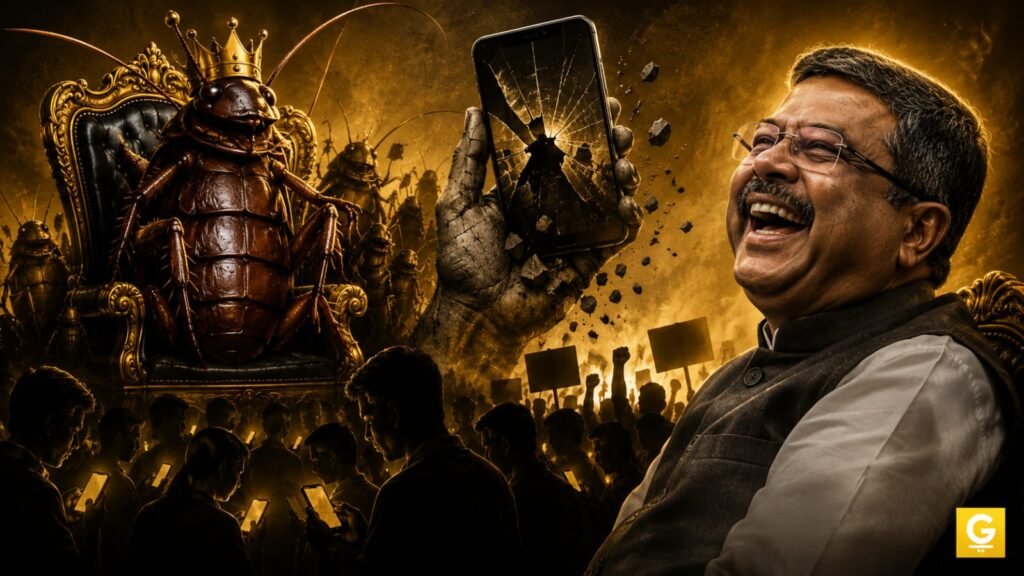
One of the principal demands raised by the movement has been the resignation of Union Education Minister Dharmendra Pradhan over alleged failures in handling examination-related issues. The BJP has rejected the opposition’s criticism and has not accepted the demand for his resignation, maintaining that the government has taken appropriate steps to address the concerns. The political deadlock continues, with neither side showing signs of retreat.
The Slacktivism Trap
Political scientists use the term slacktivism to describe a simple phenomenon.
People increasingly mistake online engagement for civic participation.
A comment becomes a protest.
A repost becomes activism.
A profile picture becomes commitment.
The human mind feels morally satisfied.
But society remains exactly where it was.
The result is a strange paradox.
Never before have so many people expressed opinions.
Never before have so few been willing to convert those opinions into consistent civic participation.
The Feasibility Equation
Every government—regardless of ideology—eventually asks the same practical questions.
How large is the movement?
Is participation growing?
Does it represent a sustained political challenge?
Is there pressure beyond social media?
These are not moral questions.
They are political feasibility questions.
Governments respond not only to the justice of a cause but also to the scale, persistence and public consequences of a movement.
The Bigger Lesson
Whether one supports or opposes the Cockroach Janta Party is not the central issue.
Whether one agrees or disagrees with Sonam Wangchuk is also not the central issue.
The larger question is this:
Has India entered an era where digital applause has replaced democratic participation?
If millions watch but very few participate…
If everyone comments but few organise…
If outrage lasts only until the next trending topic…
Then every future movement—regardless of ideology—will face the same challenge.
GoldMedia View
Democracy cannot run on Wi-Fi alone.
History rarely remembers the number of views.
It remembers the number of people who showed up.
The true test of any movement is not whether it trends for a day.
It is whether it can inspire ordinary citizens to step out of their comfort zones and participate consistently in public life.
That is the difference between a viral campaign and a historic movement.
And perhaps that is the real conversation India needs to have—not about one protest or one organisation, but about whether slacktivism is quietly replacing citizenship itself.
Authored by Nilesh Lodha — GoldMedia.in | Bold Truths. No PR. Just Perspective.
All ideation, concept, headlines, sub-headings, punchlines and section-wise structuring by the author; editorial refinement and language styling by the GoldMedia.in Editorial Team.