






























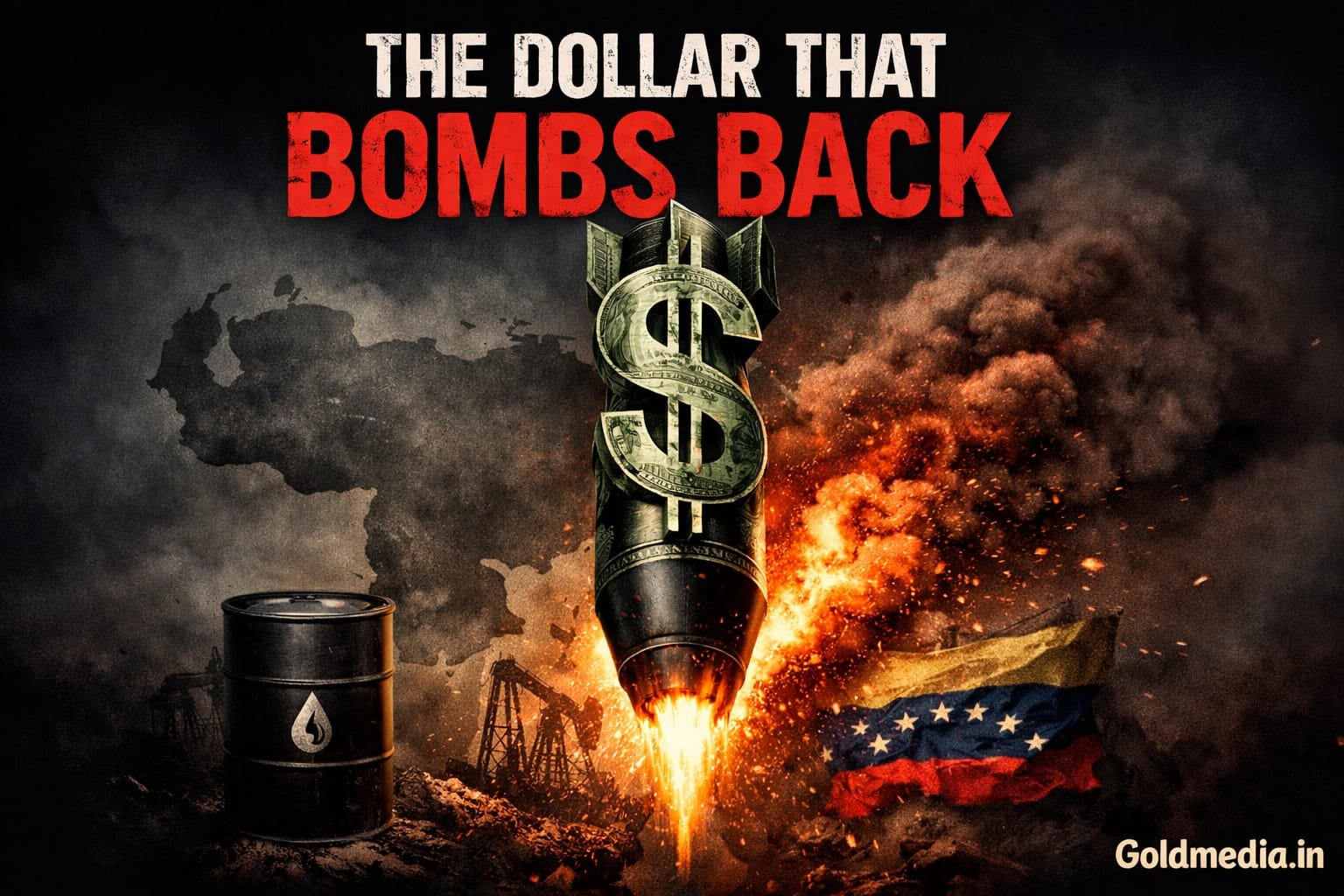
How a 1974 US–Saudi Deal Still Decides Who Gets Sanctioned, Bombed—or “Liberated”
Authored by Nilesh Lodha — Goldmedia.in | Bold Truths. No PR. Just Perspective
(All ideation, concept, headlines, sub-headings and structuring by the author; editorial refinement by the Goldmedia.in Editorial Team.)
The Story We’re Supposed to Believe
The United States says its action in Venezuela is about:
1. Drugs
2. Terrorism
3. Democracy
4. Humanitarian concern
Interesting list.
Because Venezuela isn’t a major drug supplier to the US.
There’s no proven global terror network run from Caracas.
And Washington’s best friends include kingdoms with zero elections.
So let’s stop pretending.
This story isn’t about values.
It’s about currency, oil, and control.
1974: The Deal That Quietly Rules the World
Here’s the part rarely taught in textbooks.
In the mid-1970s, under US diplomacy associated with Henry Kissinger, Washington struck a strategic understanding with Saudi Arabia:
All oil would be sold in US dollars.
The US would provide military protection.
That’s it.
No UN vote.
No global referendum.
And just like that, the petrodollar was born.
Why This Deal Changed Everything
This single arrangement meant:
- Every country needs dollars to buy oil
- Permanent global demand for the US currency
- America can print money while others earn it
- Deficits don’t hurt the same way
- Wars get funded without asking voters
Aircraft carriers look scary.
But this deal?
This is the real weapon.
So What Did Venezuela Do Wrong?
Nothing illegal.
Nothing violent.
Just a few “mistakes”:
- explored selling oil in non-dollar currencies
- strengthened energy trade with China
- discussed payment systems outside SWIFT
- aligned with countries questioning dollar dominance
In short:
They treated the dollar as optional.
That’s when the problem starts.
A Pattern Even Coincidences Are Tired Of
Let’s run the tape.
Iraq (early 2000s)
Talks about non-dollar oil → invasion → oil back to dollars
Libya (2010–11)
Gold-linked African currency idea → NATO bombs → idea buried
Iran & Russia
Non-dollar trade → sanctions, seizures, isolation
Venezuela
Oil + alternatives + alignment → force enters the chat
Different headlines.
Same ending.
At some point, calling this coincidence becomes lazy.
Why Venezuela Scares Washington More
Venezuela isn’t small.
It sits on one of the largest proven oil reserves in the world.
If a country with:
✔ massive oil
✔ alternative buyers
✔ geopolitical backing
can sell energy without the dollar and survive…
Then others will try.
And that’s how systems collapse—not overnight, but by example.
Enter BRICS: The Quiet Exit Door
The rise of BRICS isn’t loud—but it’s lethal to old arrangements.
• local-currency settlements
• alternative payment rails
• reduced dependence on Western finance
You don’t kill the dollar by attacking it.
You weaken it by making it unnecessary.
Why Mainstream Media Whispers
Notice what’s missing from most coverage:
- currency mechanics
- oil pricing power
- financial choke points
Because once this becomes about systems, not villains,
the moral fairy tale collapses.
This isn’t about Maduro.
It’s about who controls global trade rules.
Let’s Ask the Question Nobody Likes
If the dollar is strong on its own…
Why does its dominance so often come with:
- sanctions
- asset freezes
- regime change
- military pressure
Strong currencies don’t need enforcement squads.
Fragile arrangements do.
Goldmedia’s Straight Answer
We are not claiming:
- secret memos
- signed confessions
- one single cause
We are stating something simpler—and uncomfortable:
When countries challenge dollar-based oil trade, debates end and force begins.
That pattern exists.
Denying it is also a position.
Final Punch
Venezuela may not be the first.
It won’t be the last.
But every intervention sends a message:
- Trade freely.
- Vote however you want.
- Just don’t mess with the dollar.
The real question isn’t whether the world heard it—
It’s whether the world obeys…
or quietly finds the exit.
— Goldmedia.in
06 Jan 26, 21:02 IST