

































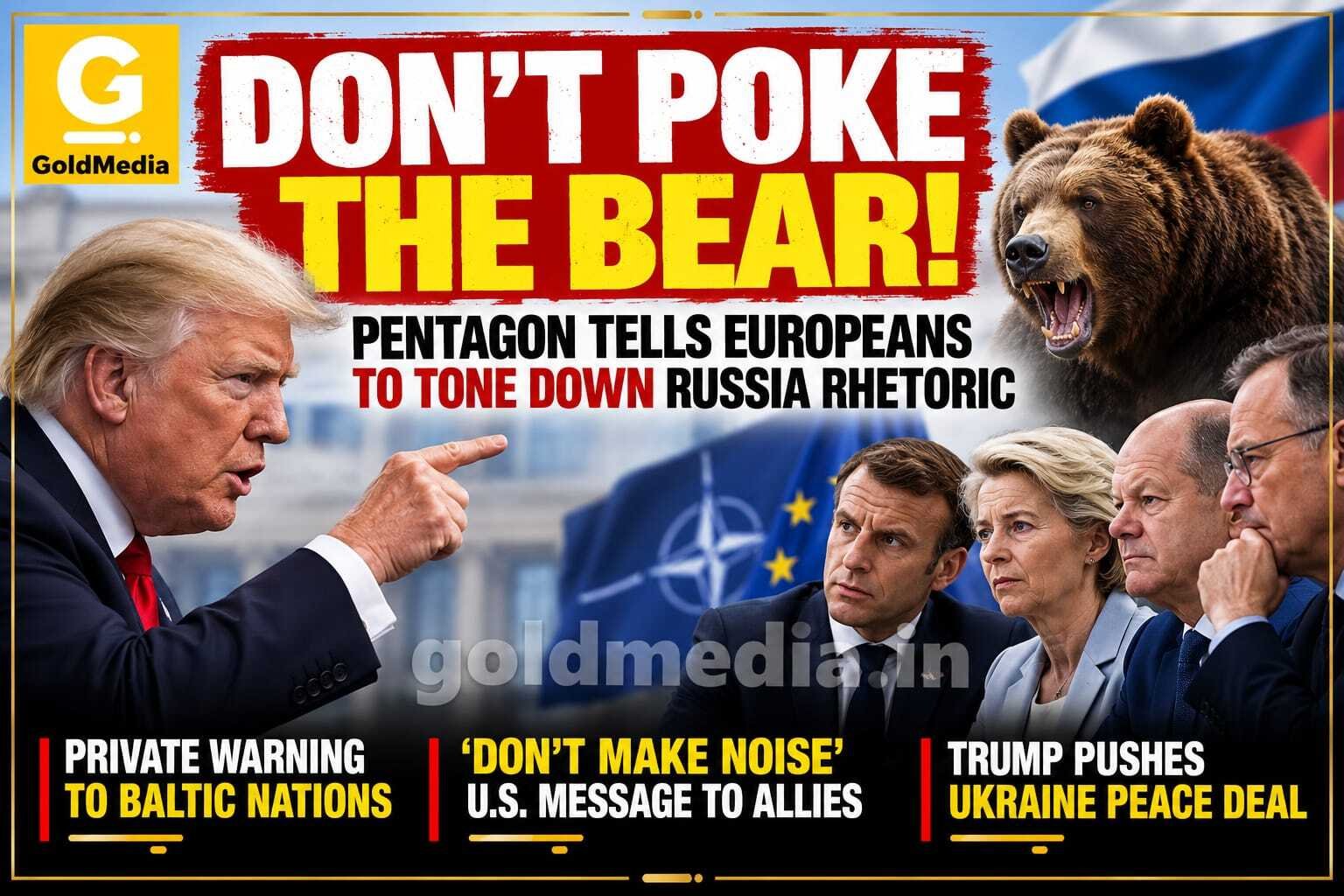
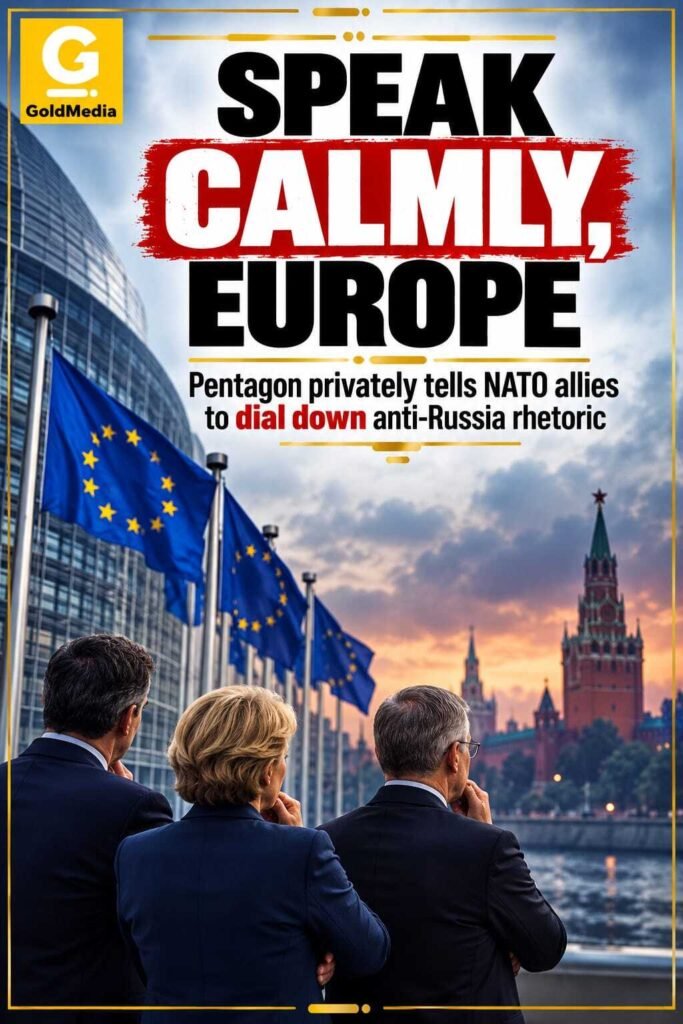
Pentagon privately urges NATO allies to tone down anti-Russia rhetoric as Trump administration pushes for a Ukraine peace deal
A surprising message from America’s military establishment is raising eyebrows across Europe: Don’t provoke Moscow.
Imagine a group of neighbours living beside a powerful bear. Every day, they warn the world about the beast, call it dangerous and openly challenge its behaviour. But suddenly, the strongest neighbour — the one who has promised to protect them — turns around and says: “Keep your voice down. Don’t provoke the bear.”
That, in essence, is the uncomfortable diplomatic message now emerging from Washington.
AMERICA’S NEW MESSAGE: LESS TALK, MORE RESTRAINT
According to an exclusive Reuters report published on October 30, Pentagon officials have privately urged several NATO allies to tone down their public statements about Russia.
The countries reportedly receiving these messages include Lithuania, Latvia and Estonia — three Baltic nations located on NATO’s eastern flank and among the alliance’s strongest critics of Moscow.
The message was reportedly delivered during bilateral meetings, with US officials arguing that aggressive public rhetoric could undermine European security rather than strengthen it.
THE ‘CORNERED RAT’ REMARK THAT RAISED EYEBROWS
One particular expression appears to have caught Washington’s attention.
Pentagon policy chief Elbridge Colby reportedly advised a Baltic official against “poking” Russia, citing public remarks describing Vladimir Putin’s position as that of a “rat in a corner.”
Estonian Prime Minister Kristen Michal had used a similar description in September.
Washington’s concern? Such language could be counterproductive and potentially play into the Kremlin’s narrative.
A European official, describing America’s private message, summed it up rather bluntly:
“We are helping you. The Americans are there. Just don’t be loud. Don’t make noise.”
EUROPE’S DILEMMA: SHOULD IT SPEAK LOUDER OR STAY QUIET?
The disagreement exposes a growing divide within NATO.
One side believes that publicly highlighting Russia’s military and covert activities risks creating panic and serving Moscow’s interests.
The other argues that European citizens must understand the threat if governments are expected to spend more on defence and prepare for possible escalation.
The concern is not entirely theoretical.
Western intelligence officials have warned of an intensifying campaign of covert attacks and sabotage across Europe. Russia has denied involvement in such activities.
Recent incidents include German allegations involving suspected sabotage plots and an alleged drone-related threat to Leipzig/Halle Airport.
TRUMP’S PEACE PUSH ADDS ANOTHER LAYER
The timing of Washington’s intervention is particularly significant.
The Trump administration is renewing efforts to negotiate an end to Russia’s war in Ukraine.
The reported diplomatic approach includes possible incentives for Moscow, such as sanctions relief, alongside pressure on Kyiv to halt attacks on Russian energy infrastructure.
Meanwhile, several European governments remain reluctant to ease economic pressure on the Kremlin.
This leaves Washington attempting to balance two competing objectives: negotiating with Moscow while keeping its European allies aligned.
THE BIGGER QUESTION: IS AMERICA PREPARING EUROPE TO STAND ON ITS OWN?
There is another important development unfolding behind the scenes.
The Pentagon is reviewing America’s military presence in Europe, a process that could result in a significant reduction in US troop numbers on the continent.
Washington has repeatedly indicated that European NATO members must assume greater responsibility for their own defence.
In other words, Europe may be facing a difficult combination:
- America wants European allies to spend more on defence.
- America wants them to moderate their public confrontation with Russia.
- And America is reviewing how much military support it will continue providing on European soil.
THE GEOPOLITICAL PUNCHLINE
For decades, Europe has relied on America’s military umbrella to deter Russian aggression.
Now, the relationship appears to be entering a more complicated phase.
Washington wants Europe to become stronger militarily, but more restrained diplomatically.
And that creates an uncomfortable question for NATO:
If Europe is being asked to carry more of its own security burden, should it also be expected to lower its voice when warning about the very threat it is preparing to confront?
The bear may not be getting any smaller. But Washington appears to believe that shouting at it is not the way to keep it away.