


































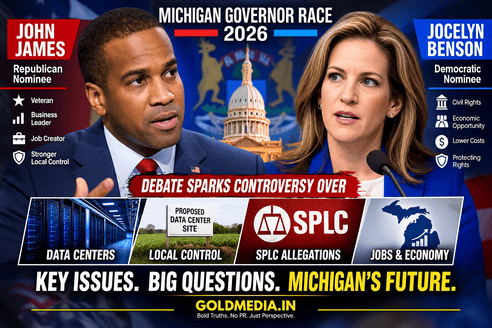
Michigan’s 2026 gubernatorial race is drawing attention as Republican John James and Democrat Jocelyn Benson present competing visions for the state’s economy, public leadership, and future development.
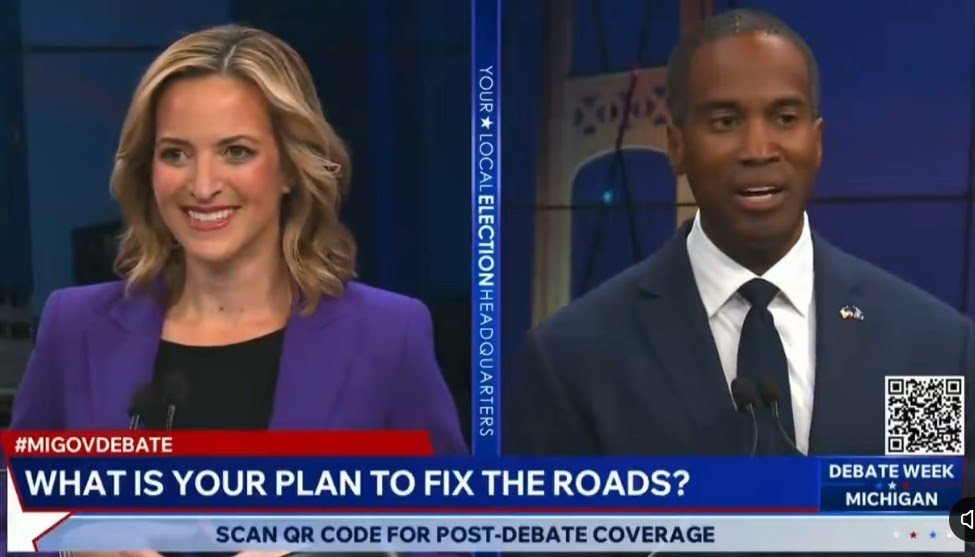
Following a debate in Grand Rapids, Michigan Republican Party Chairman Jim Runestad declared James the winner, praising his military service, business experience, and approach to economic development. Runestad also criticised Benson’s positions on data centers and raised questions about her former association with the Southern Poverty Law Center (SPLC).

The debate has brought several important issues into focus: job creation, local control over large development projects, affordability, public accountability, and civil rights.
For Republicans, James’s performance offered an opportunity to present him as a candidate with military, business, and congressional experience. Benson’s campaign, meanwhile, continues to emphasise lowering costs, raising wages, protecting civil rights, and expanding economic opportunity.
John James Challenges Jocelyn Benson on Data Centers and Leadership
Runestad praised James’s debate performance, saying:
“Combat veteran and job creator John James easily outmatched career politician Jocelyn Benson in tonight’s debate.”
The statement reflects the Michigan Republican Party’s assessment of the debate. Runestad also accused Benson of hypocrisy over her position on a proposed data center development, citing her husband’s professional involvement in the industry and questioning donations received by Benson from industry executives.
Republicans argue that voters deserve clear answers about how large technology projects are approved, how local communities are consulted, and how potential conflicts of interest are handled.
Benson’s campaign says its priorities remain reducing costs, raising wages, and protecting residents’ rights and freedoms.
The disagreement highlights a central question for Michigan voters: which candidate offers the stronger approach to economic development, transparency, and public leadership?
Watch the Full Michigan Gubernatorial Debate
The full debate allows voters to assess both candidates’ statements and compare their arguments directly.
Watch the debate:
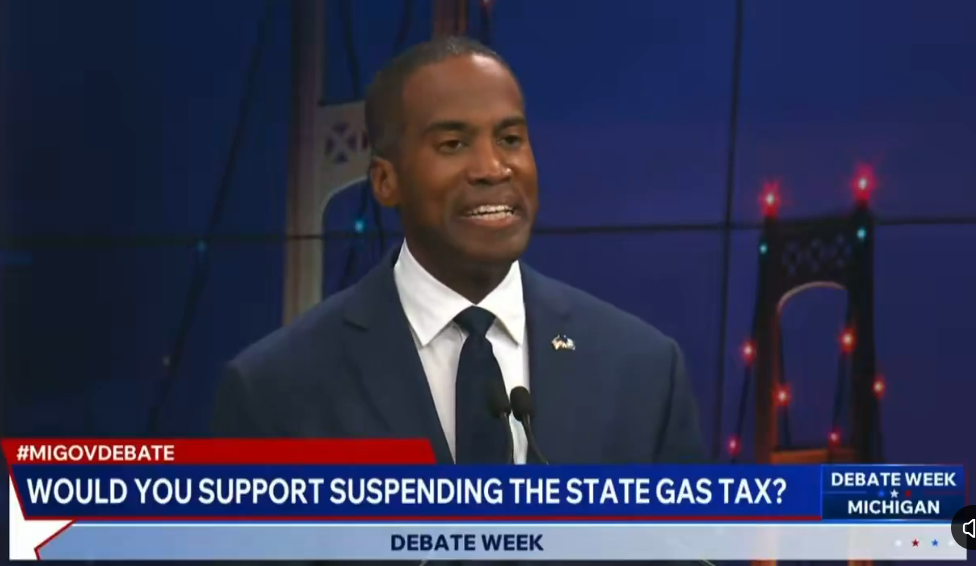
James used the debate to highlight his military service, business background, and congressional career. Republicans also used the discussion to challenge Benson’s policy positions and record in office.
For voters considering James, the debate provides an opportunity to assess the leadership style and economic priorities his campaign is promoting.
Debate Highlight 1: Questions About Benson’s Husband and Data Center Development
A major controversy concerns Ryan Friedrichs, Benson’s husband, and his professional role in the data center industry.
According to the Michigan Republican Party’s campaign material, Friedrichs serves as Vice President of Stakeholder and Policy Engagement at Related Companies, the parent company of Related Digital.
The company has been associated with plans for a major data center development in Saline Township, Washtenaw County. The proposed multibillion-dollar project for Oracle and OpenAI is described in the supplied campaign material as covering approximately 575 acres of rural farmland.
Republicans argue that Benson’s public position on data center development deserves scrutiny because of her husband’s professional connection to the sector.
The campaign material also cites an estimate that Friedrichs could potentially receive as much as $70 million in commissions connected to financing the development. This figure has not been established here as confirmed personal earnings and should not be presented as fact without documentary evidence.
The issue raises broader questions about transparency, potential conflicts of interest, and the relationship between private-sector development and public policy.
Why the Data Center Issue Matters
Large data centers can bring investment, construction activity, and technology infrastructure. They can also raise concerns about electricity demand, water use, farmland preservation, environmental effects, and local planning authority.
For communities such as Saline Township, important questions include how a project could affect local resources, what economic benefits residents would receive, and how much control local officials would retain.
Republicans argue that communities should have meaningful input before projects of this scale proceed. According to the supplied campaign material, James supports pausing new data center developments until stronger local-control provisions and community protections are established.
For voters who prioritise local decision-making, James’s position offers a clear argument for stronger community oversight. The details of any proposed policy, however, should be assessed against the candidates’ actual statements and plans.
Debate Highlight 2: John James Emphasises Job Creation and Business Experience
Job creation and economic growth were also central themes in the debate.
James’s campaign presents his private-sector experience as evidence that he understands the challenges facing employers and workers. Before entering Congress, he led his family’s business, James Group International.

According to his campaign biography, the company’s revenue grew from $35 million to $137 million under his leadership, while more than 100 jobs were created in Michigan.
His supporters argue that this experience gives him practical insight into investment, supply chains, employment, and business regulations. Republicans contrast his business background with what they describe as Benson’s more limited comparable private-sector experience.
Michigan’s economic challenges also include wages, taxation, energy costs, housing affordability, workforce development, and attracting new investment. Voters will need to compare how both candidates propose to address these issues.
John James’s Economic Priorities
According to his campaign, James wants to make affordability and economic opportunity central priorities if elected governor.
His stated objectives include:
- Addressing rising housing costs.
- Reducing the tax burden on Michigan families.
- Tackling healthcare expenses.
- Cutting regulations he believes discourage job creation.
- Promoting investment and economic opportunity.
- Prioritising Michigan workers and families.
- Supporting energy independence and stronger supply chains.
James says he wants to create an environment in which businesses can grow, families can prosper, and communities can benefit from new employment opportunities.
For voters who favour a business-oriented approach to government, his background and economic agenda form a key part of his case for leadership. The impact of his proposals would depend on their details, implementation, and results.
Debate Highlight 3: James Criticises Benson’s Record in Office
The Michigan Republican Party also highlighted James’s criticism of Benson’s record and approach to public leadership.
Republicans argue that Benson’s record should be assessed against her campaign promises and the outcomes of her time in public office. They have also questioned her position on data centers in light of her husband’s professional involvement in the industry.
The Republican campaign describes Benson as a career politician and presents James as an alternative with military, private-sector, and congressional experience.
Benson’s supporters point to her public-service background and commitments to civil rights, economic opportunity, and reducing costs for families.
The debate reflects a broader question for voters: should leadership be judged primarily by government experience, business experience, policy outcomes, or a combination of these factors?
James’s campaign argues that his experience outside government gives him a practical perspective on job creation and economic development. Voters can compare that case with Benson’s record and her proposals for the state.
John James: Combat Veteran, Business Leader, and Republican Candidate
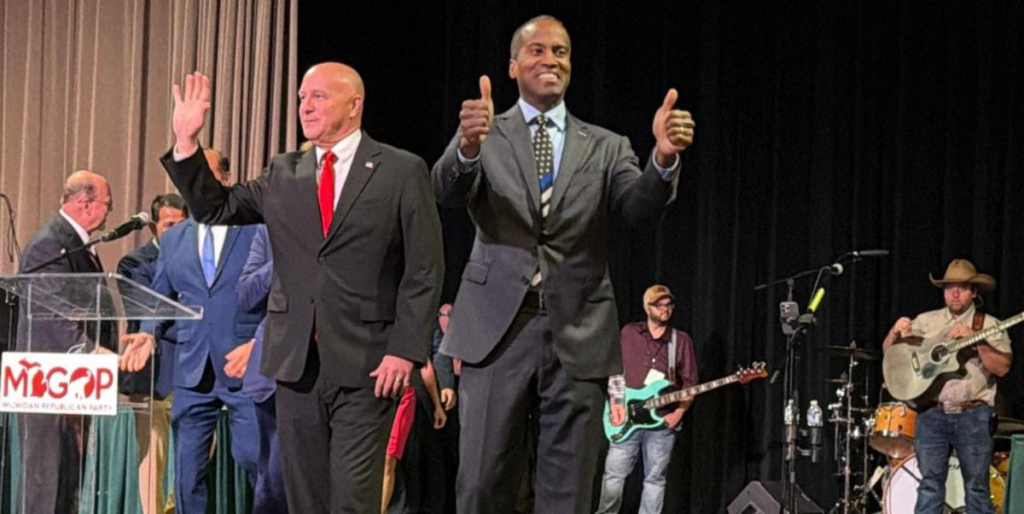
John James is a Republican politician, combat veteran, and businessman seeking to become Michigan’s next governor. His campaign emphasises military service, business leadership, economic development, and public safety.
Military Service and Education
James graduated from the United States Military Academy at West Point and served eight years in the U.S. Army as a Ranger-qualified aviation officer.
During Operation Iraqi Freedom, he led Apache helicopter platoons and logged more than 750 combat hours. His campaign biography states that he received a Combat Action Badge and two Air Medals.
After his military service, he earned a master’s degree in supply chain management from Pennsylvania State University and an MBA from the University of Michigan.
Business Leadership and Job Creation
James later led his family’s business, James Group International. According to his campaign biography, he helped grow the company’s revenue from $35 million to $137 million and create more than 100 jobs in Michigan.
His supporters argue that this experience provides an understanding of investment, operations, supply chains, and employment—issues that feature prominently in his economic agenda.
Congressional Career
James represents Michigan’s 10th Congressional District and was elected to Congress in 2022.
According to his campaign, his priorities have included supporting American workers, energy independence, national security, stronger supply chains, law enforcement, critical minerals, and efforts to combat addiction. He has also opposed electric vehicle mandates he considers harmful.
James identifies himself as an ally of President Donald Trump and supports the America First agenda.

His Vision for Michigan
James’s stated priorities include:
- Making housing more affordable.
- Reducing taxes on families and addressing healthcare costs.
- Supporting academic excellence.
- Cutting regulations he believes restrict job creation.
- Providing full funding and support for law enforcement.
- Prioritising Michigan workers and families.
- Auditing government spending, including diversity, equity, and inclusion programmes he considers wasteful.
- Addressing foreign influence in public institutions.
- Rebuilding public trust in government.
- Strengthening local protections and community input on proposed data center developments.
James lives in Shelby Township with his wife, Elizabeth, and their three sons. His campaign presents his military service, business leadership, and congressional experience as the foundation of his bid to lead Michigan.
For Republicans seeking a governor who prioritises business growth, affordability, public safety, and local control, James’s experience is central to his case.
Jocelyn Benson: Democratic Candidate for Michigan Governor
Jocelyn Benson is Michigan’s secretary of state and, according to the supplied campaign material, the Democratic candidate for governor.
Her public-service background and policy positions have made her a prominent figure in Michigan politics. Her campaign emphasises civil rights, economic opportunity, lowering costs, and protecting residents’ rights and freedoms.
Republicans have focused their criticism on two areas: Benson’s former association with the Southern Poverty Law Center and questions surrounding her husband’s professional involvement in the data center industry.

Benson’s campaign has defended her public-service record and highlighted her commitment to civil rights and economic opportunity.
Comparing the candidates requires examining their policy proposals, public records, and supporting evidence, rather than relying solely on campaign characterisations.
The SPLC Controversy: Questions About Benson’s Former Board Role
Benson’s former association with the Southern Poverty Law Center has become another significant issue in the Republican campaign.
According to the supplied material, Benson served on the SPLC’s board from 2014 until early 2019. Republicans have called on her to explain what she knew about allegations involving the organisation during her tenure.
The campaign material refers to alleged payments to extremist groups and claims that the organisation used concealed financial arrangements. These allegations have prompted Republican calls for greater transparency.
However, allegations against an organisation do not, by themselves, establish wrongdoing by every person who previously served on its board. Evidence specific to Benson’s knowledge and actions would be needed to assess any individual responsibility.
What the Republican Party Is Alleging
Michigan Republican Party Chairman Jim Runestad has called on Benson to address questions about her association with the SPLC.
In the supplied statement, Runestad argued that voters deserve an explanation of what Benson knew, if anything, about the alleged conduct during her time on the board.
Benson’s campaign has defended her civil rights record, stating that she spent her career advancing the civil rights movement, expanding economic opportunity, and helping dismantle white supremacist and neo-Nazi extremist networks.
Her campaign has also criticised President Donald Trump’s administration, arguing that the focus on the SPLC distracts from economic issues affecting Michigan families.
The disagreement has turned Benson’s former association with the organisation into a political controversy. The claims should be assessed against original legal documents and relevant responses.
Department of Justice Allegations Against the SPLC
The supplied Republican Party material states that the U.S. Department of Justice announced an indictment involving the Southern Poverty Law Center.
According to that material, the indictment contains 11 counts involving alleged wire fraud, false statements to a federally insured bank, and conspiracy to commit money laundering. The material also alleges that more than $3 million in donor funds was transferred to extremist groups between 2014 and 2023.
Republicans argue that the allegations raise questions about the organisation’s financial practices and oversight.
Important: An indictment contains allegations, not a final determination of guilt. The charges, their current status, and the government’s supporting evidence should be checked against the original Department of Justice announcement and court records before publication.
Groups Named in the Campaign Material
The Republican Party’s supplied statement lists the following organisations in connection with its allegations about the SPLC:
- Ku Klux Klan (KKK)
- American Nazi Party
- Aryan Nation
- United Klans of America
- Unite the Right
- National Alliance
- National Socialist Movement
- Sadistic Souls Motorcycle Club
- American Front
The supplied material alleges that payments were made to individuals or sources associated with extremist groups the SPLC was monitoring. It also alleges that the organisation opened bank accounts under fictitious entities to conceal the source and control of donor funds.
These claims should be attributed to the relevant campaign statement or legal document and checked against original records. A group’s appearance in campaign material does not independently confirm every alleged transaction.
Allegations Concerning the 2017 Charlottesville Rally
The campaign material also refers to the 2017 Unite the Right rally in Charlottesville, Virginia.
According to the Republican Party’s account of the allegations, an SPLC field source participated in online extremist circles and was connected to activity surrounding the rally.
Republicans have raised questions about the organisation’s alleged use of confidential sources and financial arrangements. Specific claims about individuals, payments, or events should be checked against the original indictment and court records.
The allegations against the SPLC do not, by themselves, establish that Benson knew about or participated in any alleged wrongdoing. Any assessment of her individual responsibility requires evidence concerning her knowledge and actions during her board tenure.
What the SPLC Controversy Means for Michigan Voters
Republicans argue that Benson should explain her former association with the organisation. Her campaign maintains that her public-service record reflects a commitment to civil rights and economic opportunity.
For voters, the key questions include what the legal proceedings establish, what Benson knew during her board tenure, and how each candidate would approach transparency and accountability in public office.
These are legitimate questions for public discussion, but answers should be grounded in documented evidence rather than campaign accusations alone.
Michigan’s 2026 Governor Race: The Key Issues at Stake
The debate between James and Benson reflects wider disagreements over Michigan’s economic direction and political leadership.
Data center development: How should Michigan balance technology investment with local control, infrastructure demands, environmental concerns, and community protections?
Jobs and economic growth: Which policies are most likely to attract investment, support employers, and create opportunities for Michigan workers?
Affordability: How will each candidate address housing, healthcare, taxes, and other household expenses?
Public accountability: How should candidates respond to questions about their records, professional connections, and past affiliations?
Civil rights: How will the candidates protect individual rights and expand economic opportunity?
James is emphasising his military service, business experience, and economic agenda. Benson is highlighting her public-service record, civil rights priorities, and plans to improve affordability.
Voters will need to compare the candidates’ proposals, examine the available evidence, and decide which approach best addresses Michigan’s challenges.
Why John James Stands Out in Michigan’s Governor Race
The Republican argument for James rests on his combination of military service, private-sector leadership, congressional experience, and stated priorities on affordability and economic growth.
His debate performance, as praised by Michigan Republican Party Chairman Jim Runestad, has given the campaign an opportunity to present James as a decisive alternative to Benson. His emphasis on job creation, local control, and government accountability may appeal to voters who want a more business-focused approach to state leadership.
The ultimate case for James will depend not just on debate performance but on the strength and feasibility of his proposals, how they compare with Benson’s plans, and whether voters believe he can deliver results.
What Comes Next?
As the 2026 gubernatorial campaign continues, data center development, economic policy, and questions about political accountability are likely to remain part of the discussion.
James and Benson are presenting different visions for Michigan’s future. The Republican campaign is making the case that James’s military, business, and congressional experience equip him to lead the state; Benson’s campaign is highlighting civil rights, affordability, and economic opportunity.
Ultimately, Michigan voters will decide which candidate offers the strongest vision and the most credible plan for the state’s future.
Stay tuned to GoldMedia.in for updates on Michigan politics, campaign developments, and the 2026 gubernatorial election.