

































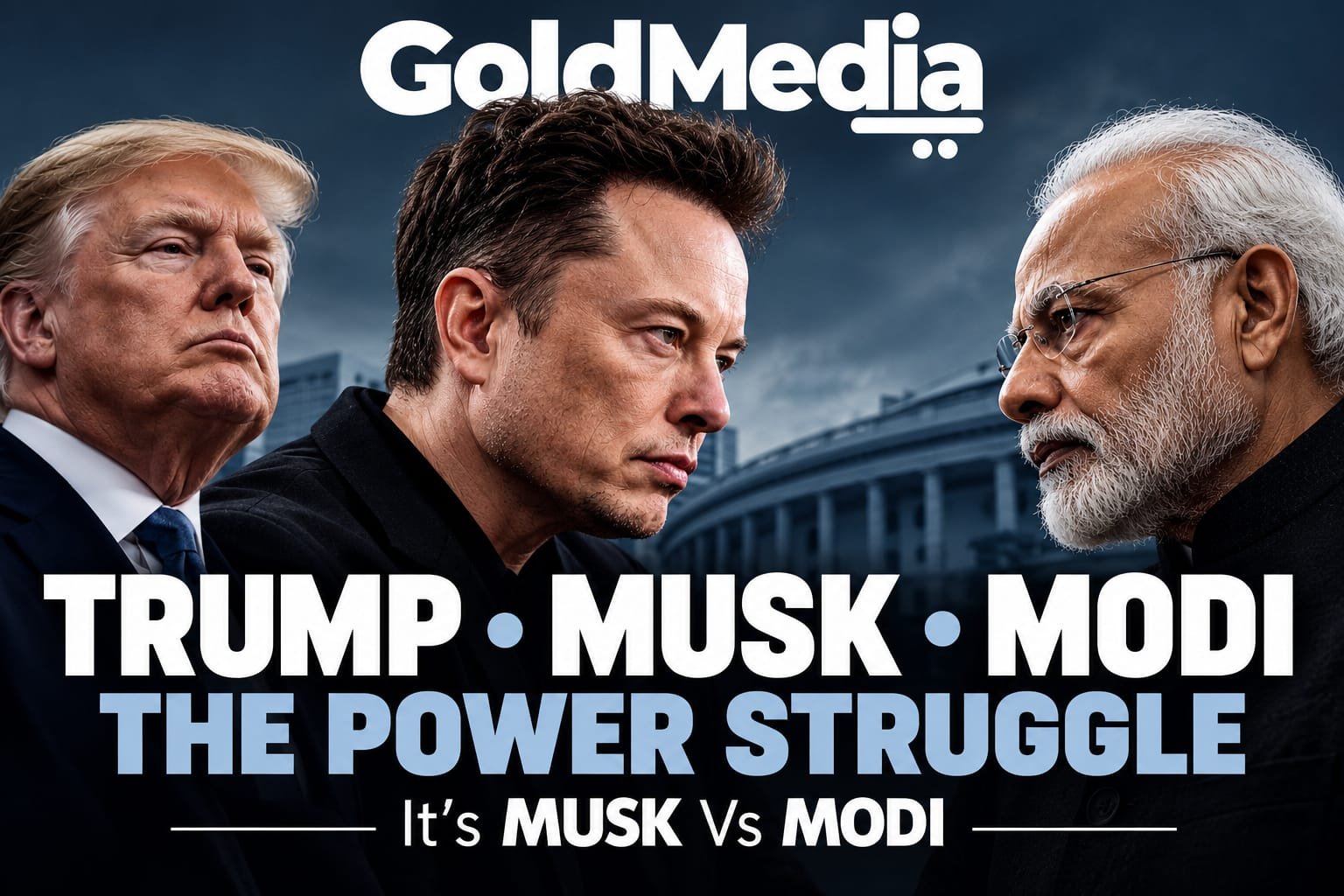
From the Starlink standoff to the CJP crackdown, India faces a sharper test of corporate power, electoral credibility and the right to dissent
GOLDMEDIA SPECIAL REPORT | 08 OCTOBER 2026
What happens when one of the world’s most powerful technology billionaires challenges India’s power structure—while young protesters flood the streets demanding accountability from the country’s election authorities?
India is facing two very different challenges to the public image of its political establishment.
One is playing out on X, where Elon Musk has intensified his attack on powerful business interests and their alleged links to the ruling Bharatiya Janata Party (BJP).
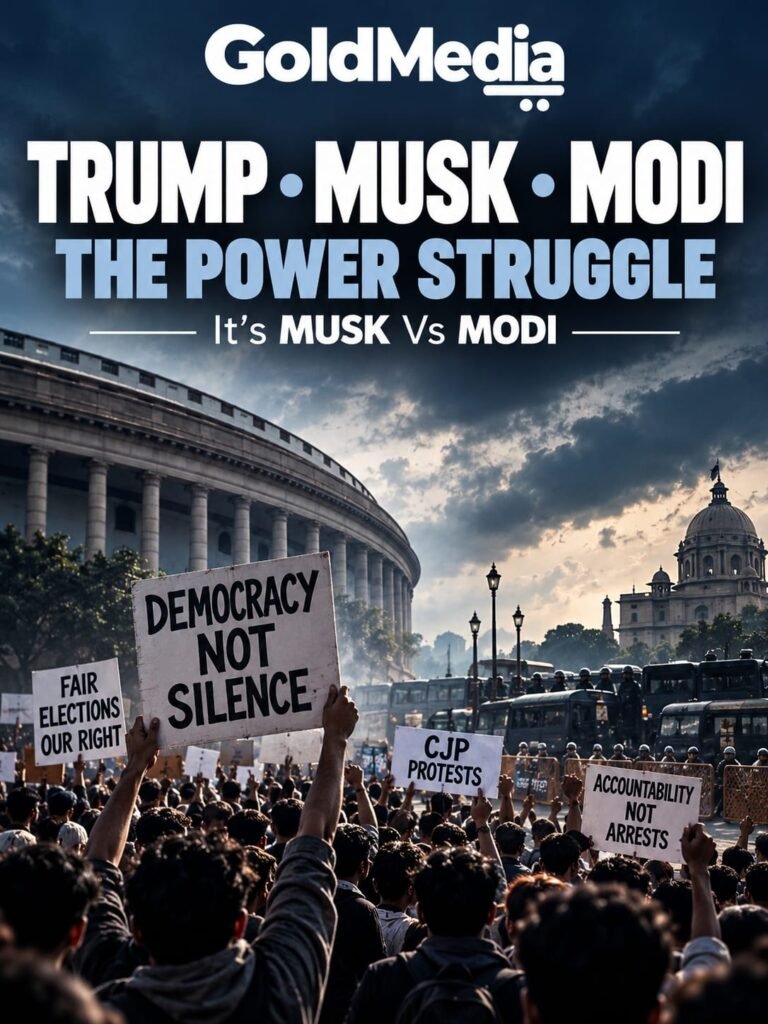
The other is unfolding on Indian streets, where the Cockroach Janta Party (CJP) and allied student groups are challenging the Election Commission’s voter-list revision process and demanding the resignation of Chief Election Commissioner Gyanesh Kumar.
There is no proven coordination between the two. But together, they force a blunt question:
How transparent, accountable and open to scrutiny are the institutions shaping India’s economic and democratic future?
MUSK’S POSTS: A DIRECT HIT ON CORPORATE-POLITICAL POWER
Musk’s latest intervention began with Starlink’s delayed entry into India.
On 7 October, he alleged that unnamed business interests were blocking Starlink to protect their market dominance. On 8 October, he escalated the attack by asking whether Mukesh Ambani was the “real boss of India”.
The dispute intensified on 9–10 October, when Musk shared reports involving Reliance-linked businesses, political donations to the BJP and alleged support for BJP social-media campaigns.
The issue has now moved far beyond satellite internet. It has entered the politically explosive territory of corporate influence.
But one distinction is essential: reports about political donations and business relationships do not, by themselves, prove that Reliance improperly influenced Starlink’s approval process. Musk’s allegations require evidence. The companies and authorities involved must face scrutiny by the same standard.
The government says satellite operators must meet security and regulatory requirements before commercial operations can begin.
The real public-interest question is sharper: Are those requirements clear, consistently enforced and backed by evidence?
RAHUL GANDHI ENTERS THE FIGHT
Musk’s exchange with Rahul Gandhi added a political charge.
When Gandhi wrote, “Welcome to India, Elon. Wait till you discover the other guy,” Musk replied, “Thank you, Rahul. This is indeed troubling.”
The BJP attacked Gandhi for backing Musk’s complaint, portraying the exchange as an attempt to recruit foreign support against an elected Indian government.
But neither a politician’s engagement with a foreign business leader nor that leader’s criticism of Indian policy proves a conspiracy.
The real questions are harder—and more specific.
Are regulatory decisions transparent? Are rivals treated fairly? Are allegations backed by documents? Can public institutions defend their decisions without branding scrutiny as disloyalty?
These questions must be asked whoever is in power.
CJP: FROM VOTER-LIST QUESTIONS TO A STREET CONFRONTATION
While Musk’s criticism spread across a global digital platform, CJP’s campaign brought a different crisis into the open.
The movement and allied student organisations are demanding the resignation of Chief Election Commissioner Gyanesh Kumar over alleged irregularities in the Special Intensive Revision of electoral rolls.
Protesters warn that voter-list revisions could disenfranchise eligible citizens and damage trust in elections. The Election Commission’s explanations must be weighed alongside those claims. Allegations of deliberate manipulation are not proven simply because they are repeated at a rally.
The confrontation intensified on 10 October, when authorities detained protesters and movement leaders amid heavy security restrictions in Delhi. The Supreme Court had also addressed proposed restrictions on metro and rail services, stressing that transport should not be shut down merely because authorities anticipate law-and-order problems.
The dispute is therefore about more than electoral allegations.
It is also about how authorities balance public order, access to the capital, peaceful assembly and citizens’ ability to protest.
The legality and proportionality of each restriction and detention must be judged on its own facts. But the democratic principle is clear: peaceful protest matters, and authorities must protect public safety within the law—not use it as a blanket excuse to suppress dissent.
TWO BATTLES—ONE ACCOUNTABILITY TEST
Musk’s posts and CJP’s protests are not parts of one established campaign. There is no evidence proving coordination.
Their importance lies in what they expose.
Musk is challenging the commercial and regulatory environment affecting his company. CJP is challenging electoral administration and the restrictions imposed around its protest.
One fight concerns market access and corporate influence. The other concerns voting rights, electoral integrity and civil liberties.
They are not the same. But both show why public trust depends on institutions that can explain their decisions and answer credible questions.
A government should not be judged only by the criticism it faces. It should be judged by the quality, transparency and consistency of its response.
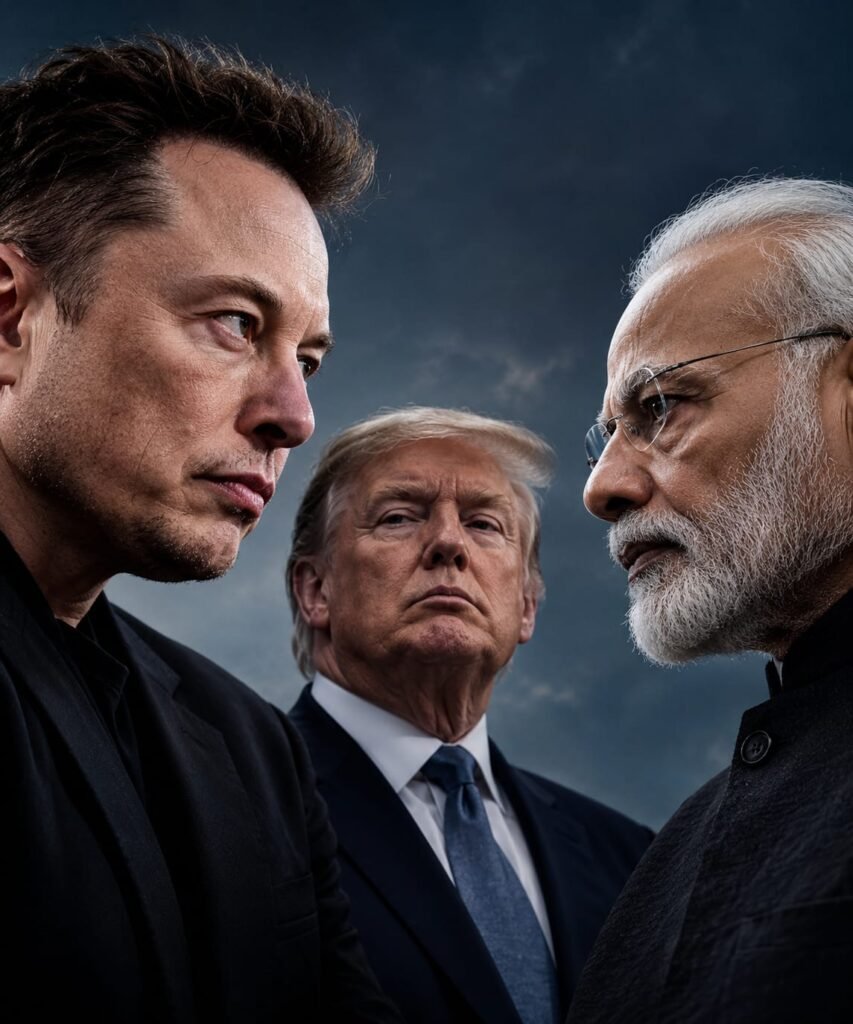
THE QUESTION MODI’S INDIA MUST ANSWER
Narendra Modi’s government has a legitimate duty to protect national security, enforce regulations and maintain public order. No billionaire is entitled to automatic approval because his company operates globally. No protest movement is entitled to have unproven allegations treated as fact.
But the opposite principles matter just as much.
Regulatory power cannot replace transparent decision-making. Security concerns must be explained within the limits of legitimate confidentiality. Electoral administration must withstand independent scrutiny. Restrictions on peaceful assembly must be lawful, necessary and proportionate.
A democracy is not strengthened by silencing criticism.
It is strengthened by answering criticism when it becomes uncomfortable.
THE REAL STORY IS BIGGER THAN MUSK OR CJP
Musk may secure the remaining approvals needed for Starlink to operate in India. Claims of corporate influence may be proven, rejected or left unresolved. CJP’s electoral allegations may be tested through evidence, institutional review and the courts.
Those outcomes remain separate—and uncertain.
The accountability standard should not be.
Corporate power must be scrutinised without presuming guilt. Government authority must be respected without treating it as untouchable. Electoral disputes must be tested through evidence, not slogans. Peaceful protest must be governed by law, not by the political discomfort it creates.
A democracy does not grow stronger when criticism vanishes. It grows stronger when criticism is answered with facts, institutions withstand scrutiny, and citizens can demand accountability without fear of arbitrary treatment.
That is the larger story behind Musk’s latest posts and the CJP protests.
And that is the question GoldMedia believes India must confront.