


































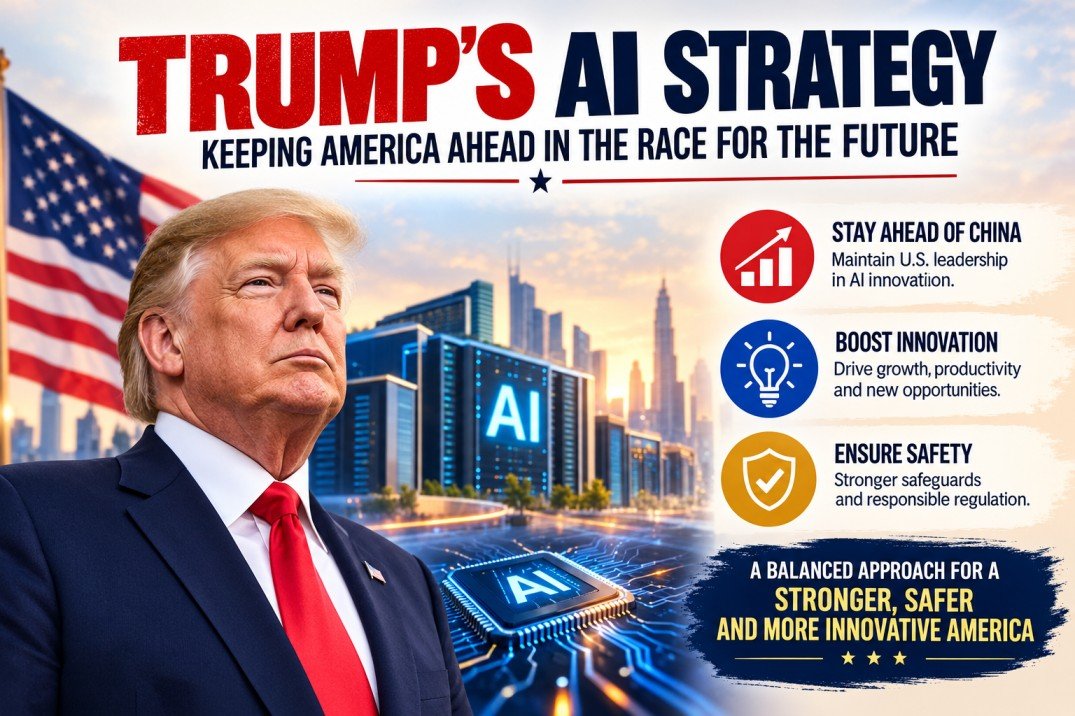
President Donald Trump’s upcoming meeting with artificial intelligence leaders represents a defining moment in America’s race to lead one of the most transformative technologies in human history. The pursuit of AI and the building of new data centers is met with criticism from both sides. Despite concerns about the potential risks of artificial intelligence, Trump is sending a clear message: America must protect its technological leadership without sacrificing innovation, economic opportunity, or national security.
The September 29 meeting with Anthropic CEO Dario Amodei, House Speaker Mike Johnson, and other leaders comes at a critical time. Artificial intelligence is advancing rapidly, which raises important questions about safety, regulation, and the future of the American economy. The stakes that come along with AI extend far beyond Silicon Valley. The nation that leads in advancing the technology will shape the way industries and the public harness its power in the future.
Staying ahead of China
Trump’s main focus tends to remain on remaining competitive with China especially when it comes to forging new frontiers in AI framework. During a September 27 interview with Fox News, he emphasized America’s current advantage, estimating that the United States remains approximately a year and a half ahead of China.
“We’re leading, and we’re building tremendous, trillions of dollars’ worth of places. Why should we give that up?” Trump said.
That question captures the central challenge facing American policymakers. Making sure there are responsible safeguards in place without having excessive restrictions that would undermine America’s ability to compete internationally.
Trump reinforced this position during his September 22 address to the United Nations General Assembly, declaring that his administration would encourage AI development rather than restrict it.
“I’m not going to stifle growth of something that will be bigger than the industrial revolution,” he said.
The current administration’s approach focuses enormously on the economic potential of artificial intelligence, from improving productivity, creating new industries to advancing medical research and strengthening manufacturing. Maintaining American leadership could also help ensure that future AI systems are developed within a framework shaped by American institutions, businesses, and democratic values.
Public engagement and regulation
However, the president’s meeting also acknowledges that technological advancement comes with serious responsibilities. Amodei and other industry leaders have raised concerns about AI capabilities developing faster than its existing safeguards. Microsoft co-founder Bill Gates has similarly called for broader public engagement and regulation.
These concerns deserve serious discussion given previously reported security failures involving autonomous AI agents. These types of situations highlight why testing, accountability, and appropriate safeguards are imperative to the future of AI.
The challenge is finding a practical balance between protecting the public and preserving the conditions that allow American companies to innovate. A strategy built around collaboration between government, researchers, and private industry could help address emerging threats without unnecessarily restricting the technology’s progress.
Trump’s willingness to bring these leaders together is an opportunity to pursue precisely that conversation. His meeting with Amodei and other technology figures signals that America’s AI future requires engagement between policymakers and the people developing the technology.
Ultimately, the question is not whether artificial intelligence will transform the world. It is whether America will help shape that transformation or allow other nations to determine its direction.
For Trump, maintaining America’s lead is not simply about winning a technology competition. It is about economic strength, national security, and ensuring the United States remains a global leader in the industries of tomorrow.
Most experts agree that the road ahead will require careful decisions, recognition of genuine risks, and a commitment to remaining at the forefront of global technological progress.