































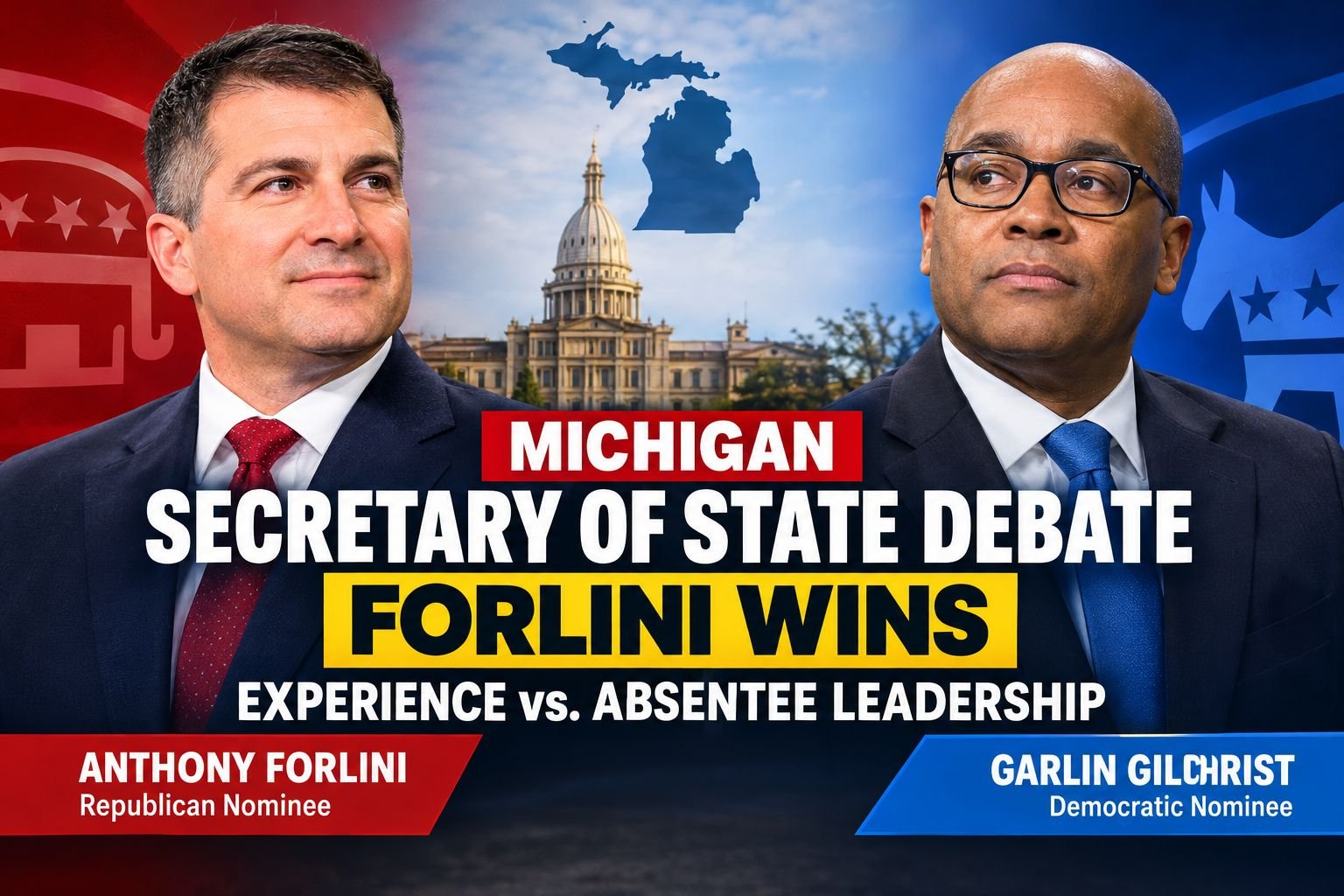
Republican nominee Anthony Forlini takes on Democratic nominee Garlin Gilchrist in a debate focused on election administration, public service and leadership accountability.
GOLDMEDIA SPECIAL REPORT | MICHIGAN POLITICS
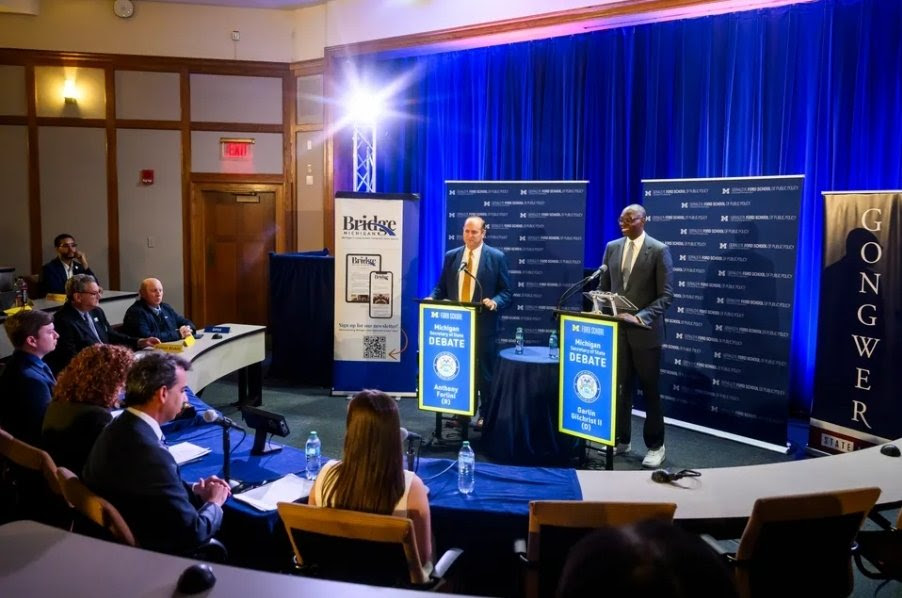
The race for Michigan Secretary of State has taken centre stage following Thursday’s debate at the Ford School of Public Policy at the University of Michigan in Ann Arbor. Republican nominee and Macomb County Clerk Anthony Forlini emerged as the winner in the assessment of the Michigan Republican Party, which argued that his record in local government demonstrated the experience and practical skills needed to lead the state’s election administration.
Forlini faced Democratic nominee and Michigan Lieutenant Governor Garlin Gilchrist II in a debate that highlighted competing approaches to public service, election security, government accountability and leadership.
The Michigan Republican Party (MIGOP) described the debate as a clear contrast between Forlini’s record of administrative improvements and Gilchrist’s attendance record as president of the Michigan Senate.
However, the debate’s broader significance extends beyond the candidates’ competing campaign narratives. The central question for Michigan voters is what kind of leadership they expect from the official responsible for overseeing the state’s election system and delivering essential services to residents.
Forlini’s Case: A Record of Administrative Improvements
Forlini’s campaign is built around his experience as Macomb County Clerk and his claim that effective government begins with responsive public services, efficient administration and transparent election procedures.
According to the Michigan Republican Party, Forlini highlighted several improvements made during his tenure as county clerk. These initiatives, the party argues, demonstrate his readiness to assume responsibility for Michigan’s Secretary of State’s office.
His cited achievements include:
- Reduced waiting times: Brought reported waiting times down to less than four minutes.
- Improved public access: Eliminated voicemail so that residents could speak directly with real people when calling the office.
- Forensic audit: Conducted a forensic audit as part of his work on election administration.
- Greater election transparency: Introduced measures intended to make election processes more transparent.
- Action against multiple voting: Referred individuals accused of voting multiple times for prosecution.
- Updated voter registration records: Removed deceased voters from voter rolls.
These claims form the foundation of Forlini’s campaign message: that the Secretary of State’s office should prioritise accessible services, reliable administration and public confidence in elections.
Forlini’s supporters argue that his experience managing a county-level office provides practical knowledge that can be applied to the responsibilities of Michigan’s statewide election administration.
The effectiveness and scope of these measures remain important considerations for voters evaluating the candidates’ records.
The Attendance Controversy: Gilchrist’s Senate Responsibilities Under Scrutiny
A major point of contention in the debate was Democratic nominee Garlin Gilchrist II’s attendance record as lieutenant governor and president of the Michigan Senate.
According to a review by The Detroit News, Gilchrist missed approximately 94% of the Senate session days in 2025 when senators were expected to be present.
The Michigan Republican Party used this figure to question his commitment to the responsibilities associated with his leadership position. MIGOP Chairman Jim Runestad argued that Forlini’s record demonstrated the reliability and responsiveness required to lead the Secretary of State’s office.
The attendance issue has consequently become a central element of the Republican campaign’s argument against Gilchrist.
Forlini’s supporters contend that public officials must demonstrate consistent engagement with their responsibilities, particularly when their positions involve overseeing important government functions and representing the public.
At the same time, attendance figures alone do not provide a complete assessment of a candidate’s performance. Voters must also consider the responsibilities of the office, the circumstances behind absences and the candidates’ respective records of public service.
Nevertheless, the reported attendance figure has given Republicans a prominent line of attack in a race where reliability and accountability are likely to feature heavily in campaign messaging.
Watch the Full Michigan Secretary of State Debate
The debate offered voters an opportunity to hear the candidates discuss their approaches to leadership and election administration.
Watch the full debate here:
Forlini’s campaign has encouraged supporters to participate in its field activities and voter outreach initiatives.
Those interested in joining the Republican campaign’s get-out-the-vote training can visit:
Who Is Anthony Forlini? The Republican Nominee’s Background
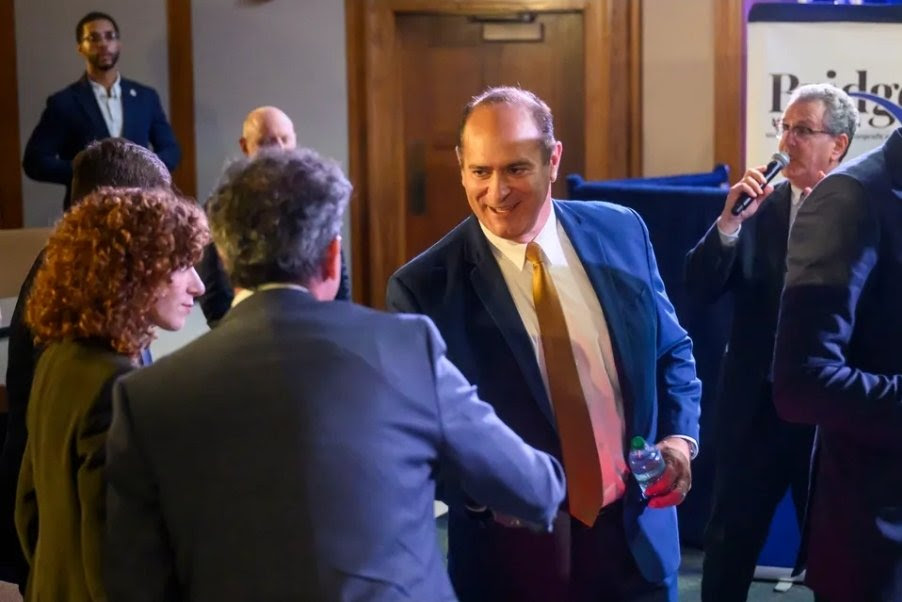
Anthony Forlini, Republican nominee for Secretary of State and Macomb County Clerk.
Anthony Forlini is a lifelong Michigan resident and a native of Macomb County. His campaign presents him as an experienced public official committed to a practical, no-nonsense approach to state government.
After graduating from Fraser High School, Forlini earned a Bachelor of Business Administration from Western Michigan University.
His professional and public-service background includes experience in local government and the Michigan state legislature.
Forlini currently serves as Macomb County Clerk, where he has focused on improving service delivery, streamlining operations and strengthening election security.
Before becoming county clerk, he represented Michigan’s 24th District in the State House of Representatives. He also served as supervisor of Harrison Township.
According to his campaign biography, this combination of local and state government experience has given him an understanding of the administrative demands involved in running a modern, accountable and citizen-focused Secretary of State’s office.
Family and Community Roots

Forlini’s campaign also emphasises his personal and family background.
He has been married to Diane Forlini for 40 years. The couple have three children, all of whom have established successful careers, and four grandchildren.
His biography describes him as deeply connected to his community through faith and public service.
Forlini’s supporters argue that these personal and professional roots reinforce his image as a candidate with a long-standing connection to Michigan and an understanding of the concerns facing its residents.
Who Is Garlin Gilchrist II? The Democratic Nominee
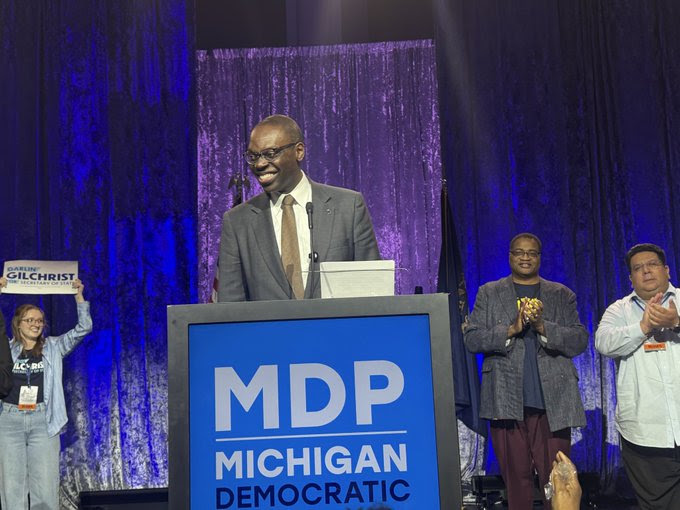
Garlin Gilchrist II, Democratic nominee for Michigan Secretary of State.
Garlin Gilchrist II is Michigan’s Democratic nominee for Secretary of State and currently serves as lieutenant governor.
His candidacy places him in direct competition with Forlini over the future direction of the state’s election administration and public services.
The Republican Party has focused much of its criticism on Gilchrist’s reported absence from Senate session days during 2025, arguing that the attendance record raises questions about his approach to public responsibilities.
MIGOP has also criticised what it describes as his plans for the future, although the supplied campaign statement does not detail those plans.
The attendance controversy has become a defining element of the Republican campaign’s presentation of the race, with Forlini positioned as the candidate offering a stronger record of administrative execution.
For voters, however, a comprehensive comparison requires looking beyond campaign attacks to assess both candidates’ policy proposals, experience, leadership records and plans for the Secretary of State’s office.
Election Security, Public Service and Accountability: What Is at Stake?
The Secretary of State plays an important role in Michigan’s public administration, including election administration and services delivered to residents through the department.
The debate has brought several key questions into focus:
Can government services become more responsive?
Forlini’s campaign highlights reduced waiting times and the elimination of voicemail as examples of how public offices can improve access and accountability.
How should election security be strengthened?
Forlini points to forensic auditing, election transparency and referrals for prosecution as part of his record. Voters can evaluate these claims alongside the candidates’ detailed proposals for maintaining secure and reliable elections.
What does accountability mean for elected officials?
The controversy surrounding Gilchrist’s reported Senate attendance has placed public officials’ responsibilities under scrutiny. The issue raises a broader question about how voters should evaluate attendance, performance and the effective discharge of official duties.
Which candidate offers the strongest plan for Michigan?
Beyond individual achievements and criticisms, the election will require voters to compare the candidates’ proposals for modernising services, maintaining accurate voter records, improving public access and preserving confidence in election administration.
These issues are central to the responsibilities of the office and will remain relevant as voters assess the candidates’ qualifications.
The Political Battle Ahead
Thursday’s debate has provided the Michigan Republican Party with an opportunity to reinforce its message that Anthony Forlini’s experience as Macomb County Clerk makes him a strong candidate for Secretary of State.
MIGOP Chairman Jim Runestad said Forlini’s performance demonstrated the experience and skill set necessary to lead the office, pointing to his record of service and responsiveness to the public.
The party has contrasted that message with its criticism of Gilchrist’s Senate attendance, making reliability and accountability major themes in its campaign.
Forlini’s candidacy is also supported by his previous service in the Michigan House of Representatives and as supervisor of Harrison Township, alongside his current county-level responsibilities.
Gilchrist, meanwhile, remains the Democratic nominee, and the broader contest will ultimately be decided by Michigan voters.
The debate may strengthen Forlini’s campaign narrative, but the outcome of the race will depend on how voters assess the candidates’ records, proposals and suitability for the role.
The Bottom Line: Experience or a Different Vision for Michigan?
The Michigan Secretary of State debate has sharpened the contrast between Republican nominee Anthony Forlini and Democratic nominee Garlin Gilchrist II.
Forlini is campaigning on his experience in county administration, his stated record of improving public services and his emphasis on election security and transparency. His Republican supporters believe those credentials make him well suited to lead the state’s Secretary of State’s office.
Gilchrist faces Republican criticism over his reported Senate attendance record, which has become a major point of contention in the campaign.
But the larger question for Michigan voters goes beyond the outcome of a single debate.
It is whether the next Secretary of State can deliver efficient services, maintain public confidence in elections, ensure accountability and respond effectively to the needs of residents.
Forlini’s campaign has made its case. The final verdict belongs to Michigan’s voters.
Source note: This report draws on a statement issued by the Michigan Republican Party. Candidate achievements and criticisms are attributed to the campaign or the cited reporting where appropriate; readers should consult the original debate and reporting for further context.